
02The decision in plain English
The first electric espresso grinder that still remembers filter coffee
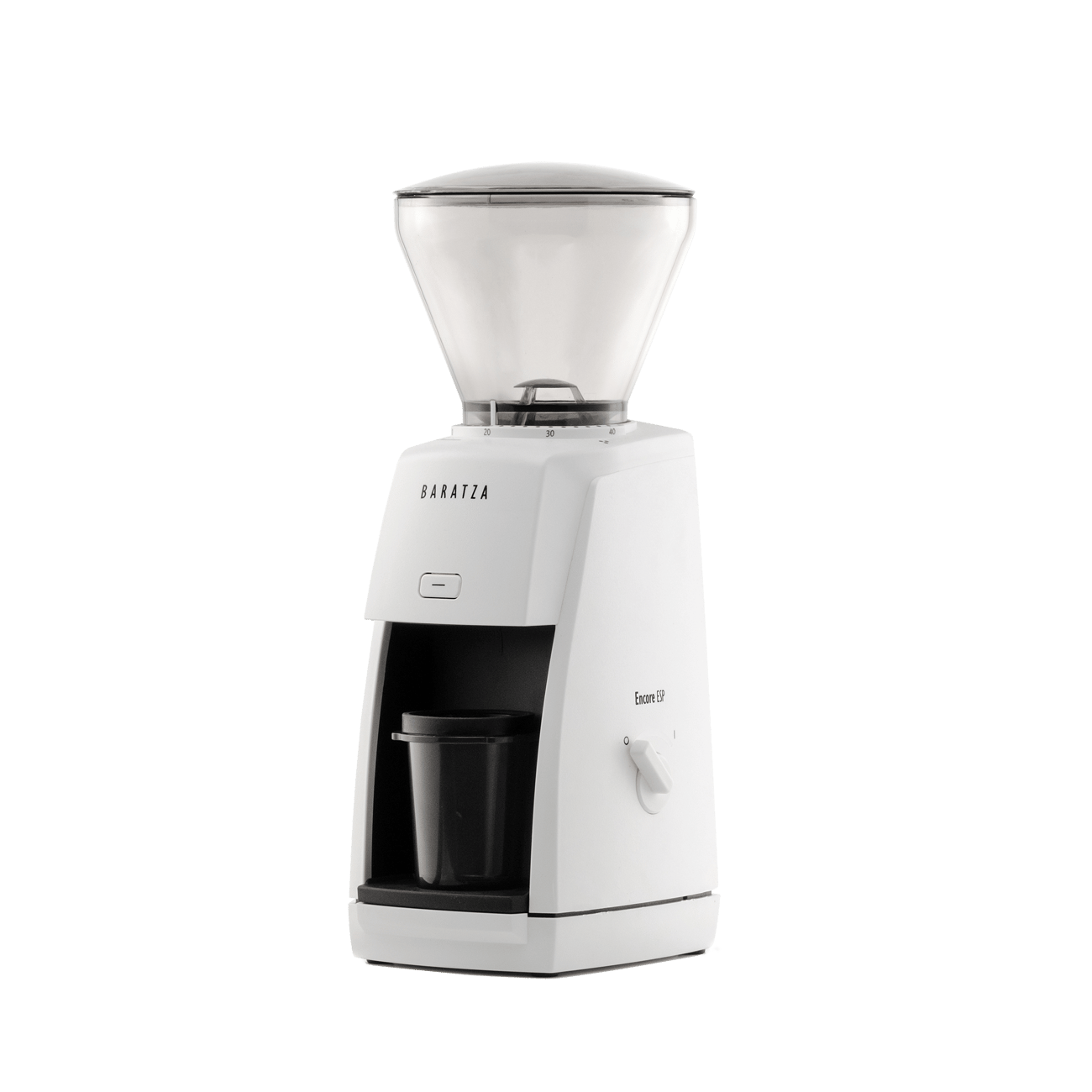
Encore ESP rebuilds the familiar Encore where it was weakest. Settings 1 through 20 make small espresso changes; 21 through 40 move progressively farther across brewed coffee. The 40 mm M2 burr, two switches, hopper, bin and portafilter cup keep operation simple.
This is the current US ZCG495, product ID CD-GR-000002, listed at $199.95 on September 17, 2026. Official specifications include 13 by 15 by 34 centimeter dimensions, 550 RPM and a 120 gram bin. [source] [source]
Reviews confirm much better espresso control than the original and useful AeroPress, drip and pour-over range. They also find clumping, retention, noise, coarse fines and a stepped ceiling. [source] [source] [source]
My short verdict: buy it for clear controls, powered mixed-method range and Baratza support. Do not expect quiet, timed dosing, stepless control or premium metal construction.
That distinction matters at checkout because the ESP is often bundled with beginner machines. A capable grinder helps more than another basket or decorative tool, yet the package still needs a scale and suitable coffee. Treat the $199.95 grinder as one part of a complete brewing system, and compare the labor it removes with the precision a similarly priced manual grinder can add.
03The first seven days
Assemble it correctly before deciding that the range is wrong
Wash only the removable plastic parts and dry them fully. Keep burrs dry, seat the ring burr and gasket as diagrammed, then install the hopper near 40. A mis-seated hopper can trigger the interlock. [source]
- Day 1: assemble dry parts and learn both switches.
- Days 2 and 3: dial one weighed medium-roast espresso one step at a time.
- Days 4 and 5: use the bin for a normal filter dose.
- Days 6 and 7: return to espresso and assess purge, mess and repeatability.
Suggested ranges are starting points. Burr seating, shims, coffee, basket and dose move the useful number. If normal adjustment cannot reach espresso, check assembly and use Baratza’s shim or support route. [source] [source]
Keep the original parts. The bin controls filter scatter and catches purge grounds; a scale remains essential because dosing is not measured.
Before turning much finer, run or remove beans so they do not load the burrs during adjustment. Write down the first espresso and filter settings, plus coffee and dose. If a number changes after cleaning, inspect the burr seat, gasket and shim stack before compensating with a radically different recipe. That sequence separates setup error from normal coffee-to-coffee variation.
04Rating deep dive
Espresso performance: a useful fine range, not infinite control
Settings 1 through 20 define the ESP upgrade. CoffeeGeek reports about 20-micron output-fineness changes per click while noting that burr movement and particle geometry differ. The practical gain is useful home-espresso resolution. [source] [source]
Use a familiar medium roast and the dose your basket already handles well, then weigh the beverage rather than trusting time alone. If the first repeatable setting misses the target, move one collar step while holding preparation constant. This establishes what the ESP changes before dose or yield becomes the fine adjustment.
When adjacent clicks bracket the target, a small dose change can bridge them but also changes headspace. Light roasts and high-flow baskets expose the ceiling sooner.
CoffeeGeek found it stronger than the original Encore and competitive with Smart Grinder Pro in that protocol, while costlier grinders did better. Serious Eats also positions it for beginners. [source] [source] [source]
Read each setting as a repeatable position, not a flavor preset. Bean age, roast development, humidity, dose and basket resistance can move the useful point. When a new bag runs differently, return to the same weighed recipe and change one click at a time. A distribution tool can break visible clumps, but it cannot create adjustment positions that the collar does not provide.
Espresso assessment
What twenty espresso settings buy
The split collar gives espresso half of the entire numbered range.
Useful resolution is not the same as infinite resolution.
| Signal | What the evidence says | Buying consequence |
|---|---|---|
| Settings 1-20 | Manual assigns small changes to the espresso zone. | Far easier to dial than the original Encore. |
| Independent comparisons | Testing finds credible shots against entry electric rivals. | A legitimate first grinder, not a specialist endpoint. |
| Stepped collar | Only fixed positions are available. | Dose may need a small correction between clicks. |
Evidence note: No Coffeedant grind-size or extraction measurements are claimed.
05Rating deep dive
Filter performance: broad coverage with larger steps and a coarse-end compromise
After 20, progressively larger changes span AeroPress, pour-over, drip and cold brew. That creates range but reduces control between neighboring filter settings.
Reviewers found good everyday results but more coarse fines than specialist alternatives. WIRED flags the coarse end; CoffeeGeek finds press and Chemex usable while favoring a low-speed flat burr for coarse-only buyers. [source] [source]
Stay below the bin’s fill line because grounds mound under the chute. For large batches, pause and empty rather than treating 120 grams as a target.
One collar credibly consolidates weekly espresso and filter. A light-roast, clarity-only buyer should instead compare filter specialists.
Filter recipes offer controls beyond the collar. A smaller dose, different paper, gentler agitation or adjusted water can change drawdown and extraction. Hold those variables steady while judging a click. For press brewing, let fines settle and decant gently before buying another grinder. If coarse cups remain consistently silty across coffees, the limitation is better solved by a filter-focused burr than constant sifting.
Filter brewing assessment
Brewed coffee beyond espresso
Filter and immersion grinding are assessed independently from espresso.
Larger steps after 20 prioritize range over close filter tuning.
| Signal | What the evidence says | Buying consequence |
|---|---|---|
| Settings 21-40 | Manual describes progressively larger changes. | Broad range in a short collar. |
| Good everyday brews | Independent reviewers use pour-over, AeroPress and drip successfully. | Credible one-grinder convenience. |
| Coarse fines | Multiple reviews identify a coarser-end compromise. | Press and Chemex specialists should compare alternatives. |
Evidence note: The score covers pour-over, immersion and other brewed-coffee use.
06Rating deep dive
Workflow: simple controls, with weighing and retention left to the owner
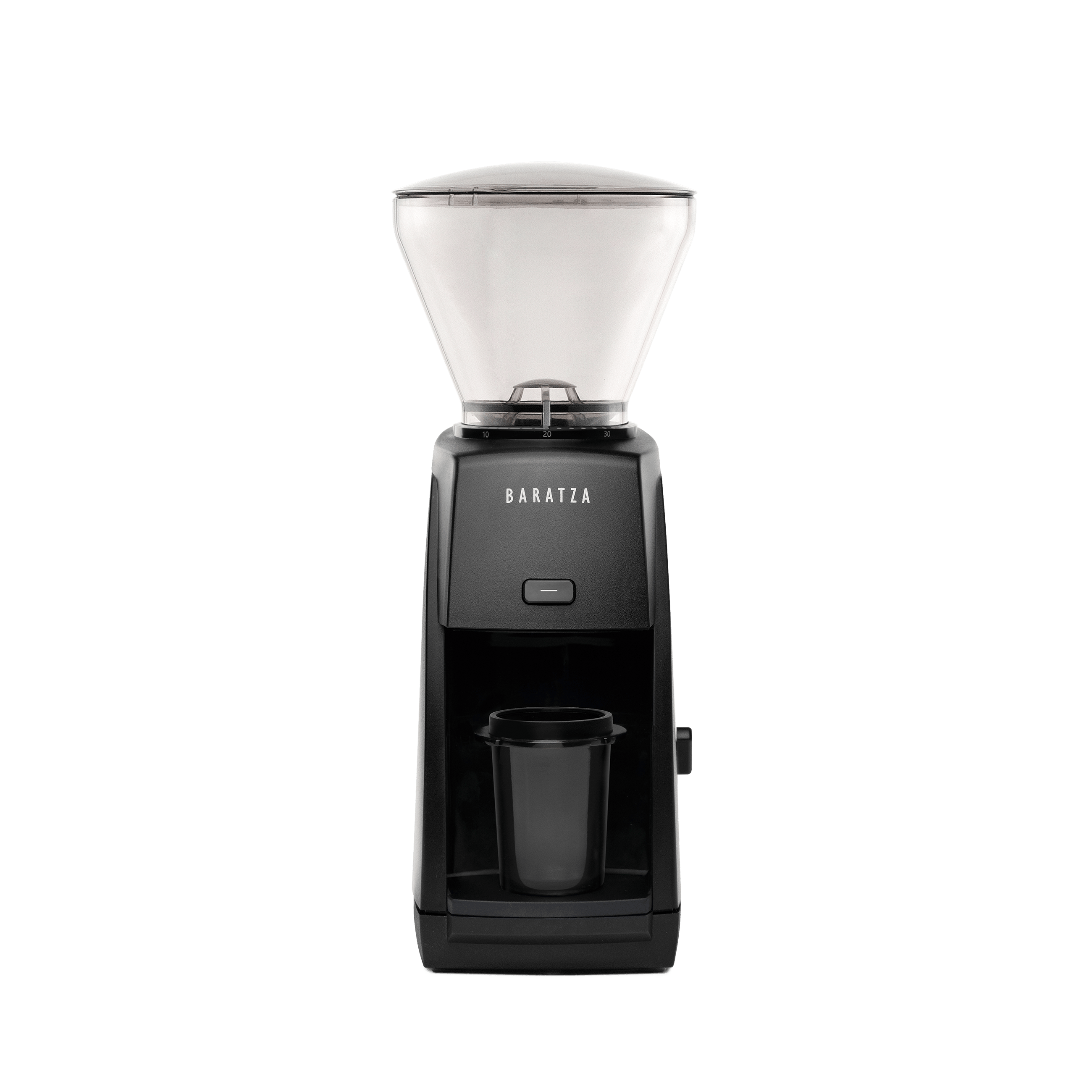
The side switch runs continuously; the front button pulses. Neither measures dose, so hopper users weigh output and single-dosers weigh beans first.
The cup fits 54 mm portafilters and adapts to 58 mm. Static, clumps and retention still appear in reviews. A light tap and consistent routine help; aggressive banging or bellows can stress parts. [source] [source] [source]
Large setting changes may release old grounds. Weigh early output and purge between very different coffees; a full hopper makes switching harder.
WIRED and J.D. Roastery call the noise noticeable. Coffeedant has not measured it, so hear one or compare a manual grinder if mornings must be quiet. [source] [source]
Choose hopper dosing only when one coffee stays loaded and speed matters more than exact input. Single dosing makes decaf and method changes easier, but asks for weighing, a short wait and occasional purge. Whichever route you choose, use the same finish routine: let the motor clear, tap lightly once, weigh output when repeatability matters and brush the chute area before residue becomes a deposit.
Workflow assessment
The work before and after the motor runs
Power removes hand effort but not dose control.
The best routine accounts for purge, static and the output mound.
| Signal | What the evidence says | Buying consequence |
|---|---|---|
| Two controls | Continuous side switch and momentary front pulse. | Easy to teach, no menu overhead. |
| No timer | Dosing is manual. | A scale belongs beside the grinder. |
| Cup plus bin | Separate espresso and filter receptacles are supplied. | Cleaner transfer when each is used for its intended task. |
Evidence note: Noise and retention were not measured by Coffeedant.
07Rating deep dive
Build and service: plastic outside, unusually clear access inside
Plastic bodywork, a weighted base and a metal adjustment system fit the $199.95 tier. It is not machined luxury, but that does not make it disposable.
A quick-release cone burr, removable ring burr and diagrammed shim stack make cleaning approachable. The hub also links parts and troubleshooting. [source] [source] [source]
The reverse-thread knob, small washers and oriented gasket still demand care. Unplug, photograph the stack, work over a tray and keep burrs dry.
The manual states a one-year limited US/Canada warranty with exclusions; international support uses local channels. Save proof of purchase and confirm the seller. [source] [source]
Service access lowers the barrier to cleaning, not the skill needed for electrical or motor work. A cracked carrier, damaged cable, burning smell or repeated breaker trip belongs with support. Parts availability also changes over time, so the current product hub is stronger evidence than the original Encore’s reputation. Photograph labels and the internal stack before a claim or disassembly changes their condition.
Build assessment
Repair access is part of build quality
Material feel is only one ownership variable.
The removable stack rewards careful, documented maintenance.
| Signal | What the evidence says | Buying consequence |
|---|---|---|
| Plastic body | Current product construction prioritizes price and low weight. | Do not expect premium tactile finish. |
| Quick-release burr | Cone and ring burr can be accessed for cleaning. | Clogs and wear are more approachable. |
| One-year warranty | Manual states current US/Canada term. | Keep records and verify regional support. |
Evidence note: Serviceability supports the rating; it does not guarantee lifespan.
08Rating deep dive
Features: the adjustment gearbox matters more than a display
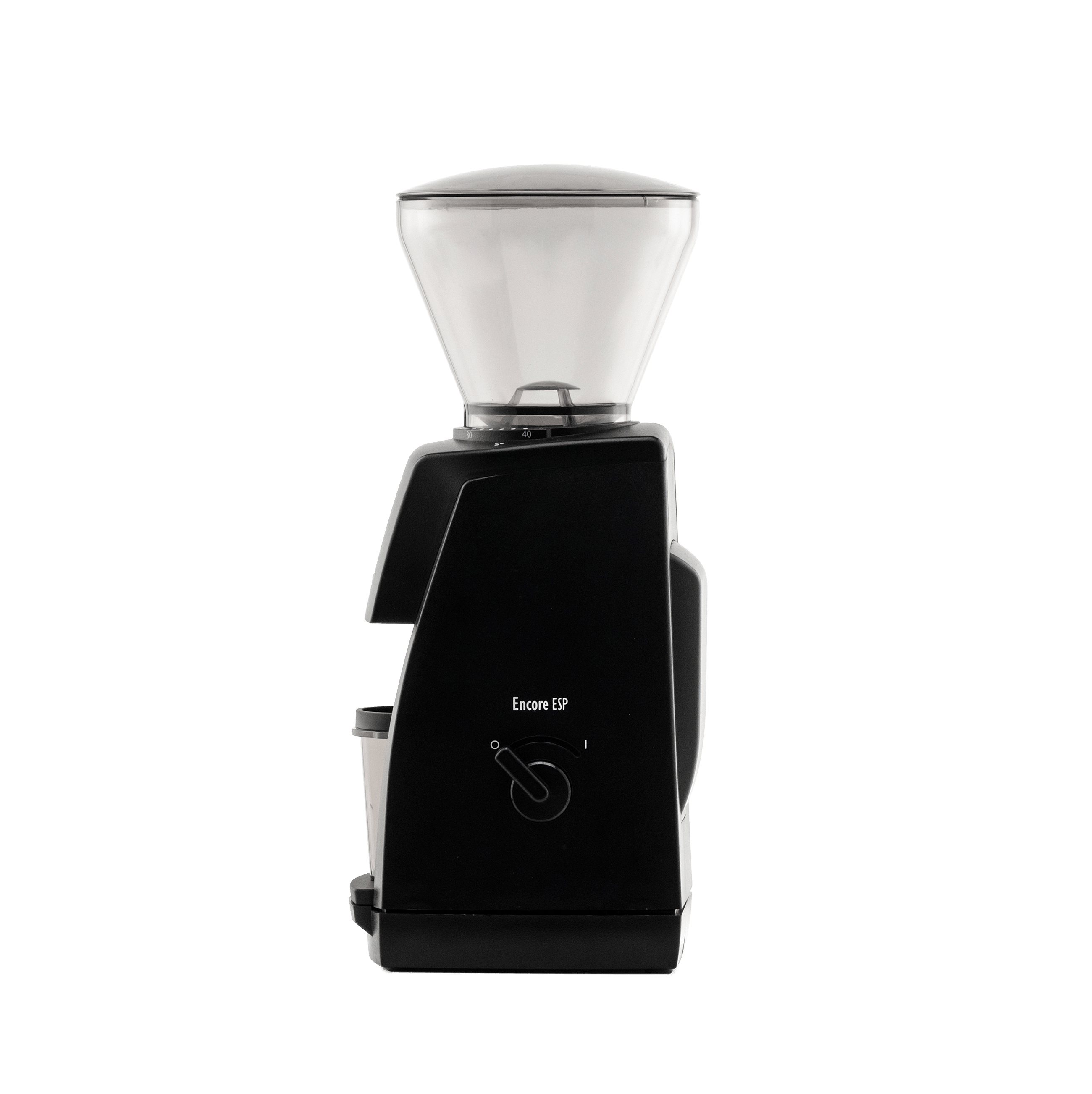
The two-rate collar gives half its positions to small espresso moves and larger jumps to filter, creating credible mixed-method range without a menu.
The bin, 54 mm cup, 58 mm adapter, base and brush are included. Quick-release access helps cleaning; shims correct the fine range only after assembly is verified. [source] [source]
There is no timer, scale, memory, ionizer, display or stepless control. Hopper dosing can waste coffee, while single dosing adds weighing and retention work. [source]
Encore ESP Pro is a separate, higher-priced product. Its features must not be transferred to ZCG495. [source]
The two-rate collar also asks users to interpret numbers by zone. A change from 10 to 11 is not equivalent to a change from 30 to 31, so a forty-setting headline understates the design. That asymmetry benefits espresso and makes coarse tuning broader. It is a sensible mechanical compromise, but a buyer who wants identical micro-control across methods needs a different adjustment system.
Features assessment
The right feature in the right place
The adjustment architecture is the reason this is an ESP rather than an original Encore.
A missing timer matters because a hopper can hold far more than one dose.
| Signal | What the evidence says | Buying consequence |
|---|---|---|
| Two-rate collar | Small espresso moves and larger filter moves share 40 positions. | Wide coverage without a complex interface. |
| 54/58 mm cup | Cup and adapter serve common portafilter sizes. | Transfer is easier, not automatically clump-free. |
| No timer or scale | Manual dosing only. | Weighing remains part of every repeatable workflow. |
Evidence note: The Encore ESP Pro is a different model and is not scored here.
09Rating deep dive
Value: $199.95 buys useful espresso control and a support ecosystem
The $199.95 direct price is accessible for electric espresso and filter, though manuals offer more metal and single-dose rivals target retention, noise or stepless control.
Value combines powered throughput, a useful espresso zone and documented support. Filter-only buyers can choose a specialist; espresso-only enthusiasts may prefer stepless adjustment.
Budget a scale, appropriate cleaner and wear parts. Hopper dosing by eye can waste enough coffee to erase a small saving.
Original Encore longevity is context, not proof for this different adjustment. Judge ZCG495 support and warranty, using anecdotes as questions rather than rates. [source] [source] [source]
Calculate the first-year system rather than comparing grinder stickers. Add a scale, cleaning supplies and the coffee likely to be wasted while learning espresso. Then compare that total with a hand grinder, a filter-only electric model and the next electric espresso tier. The ESP earns value when its motor is used often and its broad range prevents a second purchase, not merely because $200 sounds accessible.
Value assessment
Why $200 can still be the sensible tier
Value is the combination of output, labor and ownership support.
Manual and specialist grinders can win different parts of that equation.
| Signal | What the evidence says | Buying consequence |
|---|---|---|
| $199.95 direct price | Current US listing checked September 17, 2026. | Accessible electric espresso entry, subject to changing offers. |
| Mixed-method design | One collar covers espresso through coarse brewing. | Avoids buying two entry grinders. |
| Parts and guides | Product hub exposes maintenance and support resources. | Long ownership has a clearer path. |
Evidence note: Price is a dated snapshot, not a guaranteed offer.
10The shortlist
Encore ESP alternatives: hand quality, electric refinement or a higher tier
Choose K-Ultra when quiet portability outweighs hand effort, Sculptor for a higher-budget electric workflow, or an espresso specialist when forty steps bind.
| Grinder | Price position | The quick decision |
|---|---|---|
| Baratza Encore ESP | $199.95 checked | Entry electric for shared espresso and filter. |
| 1Zpresso K-Ultra | $259 checked | Quiet portable mechanics with hand effort. |
| Timemore Sculptor | Higher tier; verify model | Higher-budget electric single dosing. |
| Fellow Opus | Entry electric; verify price | Cross-shop adjustment and dosing workflow. |
DetailsOpen the technical and workflow comparison
| Grinder | Dimensions | Drive / power | Adjustment | Grounds handling | Best fit |
|---|---|---|---|---|---|
| Baratza Encore ESP | 13 × 15 × 34 cm | Electric; 550 RPM listed | 40 steps split 20/20 | Hopper, bin and 54/58 mm cup | Beginners and mixed methods |
| 1Zpresso K-Ultra | 19.5 × 18.5 × 6 cm listed | Manual | 100+ 20-micron clicks | 35-40 g magnetic cup | Small mixed-method doses |
| Timemore Sculptor | Model-specific | Electric; model-dependent | Model-specific burr and range | Single-dose transfer | Focused powered workflow |
| Fellow Opus | Compact; verify listing | Electric | Outer and inner adjustment | Single-dose cup | Buyers preferring its footprint |
Prices and dimensions are dated snapshots. Verify the exact model, voltage and included accessories before buying.
Adjustment, retention, motor behavior, parts and dose transfer matter more than burr diameter alone.
When two grinders share a price, compare the actual week: number of espresso doses, largest filter batch, decaf changes, acceptable noise and cleaning tolerance. A manual grinder may win two quiet cups but lose a four-drink morning. A single-dose electric rival may reduce hopper waste but give up Baratza’s familiar parts route. The table is a shortlist, not a universal ranking.
11Owner evidence
Community reports are most useful as a troubleshooting index
Owners praise approachable espresso and support while reporting static, clumps, retention, noise and assembly issues. These prompt inspection but cannot establish frequency. [source] [source] [source]
If output is too coarse, verify coffee, basket, dose, burr seating, gasket and hopper before adding shims.
Separate static, retained coffee and clogs: humidity affects static, setting changes reveal retention, and blocked flow needs chute clearing.
Manual grinders spend more on mechanics because the owner supplies power. ESP buys a motor and throughput instead.
The most useful owner report names the coffee, basket, dose, setting, cleaning history and exact symptom. A bare claim that the grinder is messy or too coarse cannot separate static, stale beans, misassembly or preference. Look for repeated mechanisms across detailed reports, then verify them against the manual. Even a convincing cluster lacks the denominator needed to calculate a failure rate.
12Long-term ownership
Cleaning the chute and preserving the burr stack matter more than polishing the case
Unplug, empty the hopper, run remaining beans through, then remove the hopper and ring burr as directed. Brush dry debris; wash and fully dry only approved plastic parts. [source] [source]
Oily or flavored beans deposit faster. Use approved tablets as directed, not rice. Empty the bin before its mound blocks the chute.
Follow the manual and video for clogs. If the motor hums, smells hot, trips power or remains blocked, unplug and contact support. [source] [source]
Keep washers and shims ordered, photograph layers and check assembly after a setting shift. Store proof of purchase with serial details.
Cleaning cadence should follow coffee and symptoms rather than a universal calendar. Oily beans, slower output, stale odors or visible deposits justify earlier attention. After reassembly, run a small sacrificial dose and confirm that the collar moves normally before returning to espresso. Preventive care is cheaper than repeatedly cycling a blocked chute, and a documented baseline makes support conversations much clearer.
14Static answers
Baratza Encore ESP FAQ
Can the Baratza Encore ESP grind for real espresso?
Yes. Settings 1 through 20 are designed for smaller espresso changes and independent reviewers have dialed unpressurized baskets. Its stepped range is less precise than a good stepless specialist.
How is the Encore ESP different from the original Encore?
The ESP adds a two-rate adjustment with a fine espresso zone, the M2 burr, an espresso dosing cup and revised burr access. The original Encore remains mainly a brewed-coffee grinder.
Does the Encore ESP have a timer?
No. It has a side on-off switch and front pulse button. Weigh beans before single dosing or weigh output when using the hopper.
What do settings 1-20 and 21-40 mean?
Baratza assigns 1-20 to smaller espresso adjustments and 21-40 to progressively larger brewed-coffee changes. The right number still depends on coffee, dose, basket and recipe.
Can I wash the Encore ESP burrs?
No. The steel burrs can rust. Hand-wash only the approved removable plastic parts and let them dry fully; clean burrs and chamber dry.
Why is my Encore ESP not grinding fine enough?
First check bean freshness, basket and dose, then verify burr, gasket, shim stack and hopper assembly. The manual documents shimming only after normal assembly is correct.
Is the Encore ESP good for French press?
It reaches coarse settings and can make a serviceable press brew, but independent tests report more fines at the coarse end than stronger filter-focused grinders.
What warranty does the Encore ESP have?
The manual states a one-year limited warranty for US and Canadian grinders from original purchase, with exclusions. International support and coverage come through the local retailer or distributor.
See the grinder in use
An independent video perspective
Coffee Parts
2023 Budget Friendly Coffee Grinders Encore ESP, Breville Smart Grinder & Varia VS3 | Comparison
Commercial comparative demonstration used for visible workflow and market context. It is not Coffeedant hands-on testing, and current prices come from dated primary listings.
Watch on YouTubeWhy I trust the verdict
What the evidence lets me say with confidence
I began with Baratza’s current US product page, product hub and instruction manual, including the adjustment, cleaning, unclogging, shimming and warranty sections. I then compared three long-form independent reviews, two current buyer guides, two direct video comparisons and three owner discussions. Independent measurements remain attributed to their publishers. Community reports were used to map workflow and troubleshooting questions, never to estimate reliability. Price was checked September 17, 2026. Filter brewing is evaluated separately from espresso, workflow, build, features and value.
Check the evidence
Sources and further reading
- Baratza: Encore ESP product page
Current US price, model identity, dimensions, 40 mm M2 conical burr, adjustment design, accessories, controls and product imagery; checked September 17, 2026.
- Baratza: Encore ESP instruction manual
Primary operating, adjustment, cleaning, unclogging, shimming, safety and one-year US/Canada warranty instructions.
- Baratza: Encore ESP product support hub
Current support entry point, parts, cleaning video, troubleshooting and product-specific documentation.
- Baratza: How to clean and maintain the Encore ESP
Official five-minute cleaning demonstration linked from the current support hub.
- Baratza: How to unclog your Encore ESP
Official June 15, 2023 troubleshooting demonstration. Used with the manual, not as permission to improvise repairs.
- Baratza: US warranty and repairs
Current support route. The product manual states one year from original purchase for US and Canadian grinders, subject to exclusions and regional terms.
- CoffeeGeek: Baratza Encore ESP full review
Independent instrumented and comparative review published October 20, 2023, including espresso, pour-over, coarse brewing, retention and workflow.
- WIRED: Baratza Encore ESP review
Independent hands-on review published May 27, 2023, covering espresso, several brew methods, noise, markings and coarse-setting tradeoffs.
- Serious Eats: best espresso grinders
Comparative hands-on guide that positions the Encore ESP as a straightforward entry espresso grinder; recommendations and lineup may change.
- Serious Eats: which Baratza grinder should you buy?
Current family comparison used to distinguish Encore ESP, original Encore, Sette and ESP Pro roles.
- J.D. Roastery: Baratza Encore ESP review
Independent practical review published June 24, 2024, including noise and home-workflow observations.
- Coffee Parts: 2023 budget grinder comparison
Commercial comparative video published February 27, 2023, covering Encore ESP, Breville Smart Grinder Pro and Varia VS3.
- Alternative Brewing: Fellow Opus vs Baratza Encore ESP
Commercial comparison published November 22, 2023, used to frame two entry all-purpose workflows.
- Reddit r/espresso: opinions on the Baratza Encore ESP
Owner discussion published February 24, 2024. Anecdotes identify workflow themes and do not establish failure rates.
- Reddit r/espresso: Encore ESP grinding too coarse
Troubleshooting thread illustrating why bean, basket, dose, assembly and calibration context matter more than copying a number.
- Reddit r/JamesHoffmann: KINGrinder K6 vs Baratza Encore ESP
Community comparison of powered convenience, manual value and upgrade plans. It is preference evidence, not a controlled test.
The buying decision
The Encore ESP is an entry point, not an apology
The Baratza Encore ESP solves the original Encore’s most important espresso problem without turning a first grinder into a complicated instrument. Settings 1 through 20 provide usable control, and the remaining range keeps everyday brewed coffee on the menu.
Its motor is audible, output can clump or linger, and the collar cannot match stepless precision. At $199.95, the combination of power, range and documented service still makes sense for a beginner who plans to keep both espresso and filter in the routine.
Check Amazon price