
01Start with the routine
Choose where the $500 limit applies before comparing machines
Breville
Bambino Plus
Fast electric heat and automatic or manual milk at the top of the cap.
Read the review →“Under $500” sounds precise until the grinder, kettle, scale, milk gear, water plan and care supplies enter the order. This guide uses a strict machine-only ceiling: every recommended model was at or below $500 in its dated US price context on September 25, 2026. That keeps the title auditable. It does not make every recommendation a complete $500 station. Bambino Plus consumes almost the entire cap before a grinder arrives. Flair Classic costs $159 but still needs hot water and, for its bottomless basket, fine grind control. Price the repeated workflow rather than treating the machine box as the whole system.
The four choices split into two categories. Bambino Plus and ECP3420 are electric pump machines. They heat water internally and provide steam or frothing hardware. Flair Classic and ROK EspressoGC are human-powered presses. They have no electric heater or steam boiler, so a kettle is part of every coffee and milk requires another method. The manual presses are not simply cheaper versions of the electric machines. They trade built-in heat and speed for direct pressure, quieter operation and fewer powered parts.
Begin with drinks and volume. One straight espresso gives a lever machine time to justify its ritual. Two morning lattes make internal heat and an actual steam system more valuable. Four drinks expose every sequential step: grinding, heating, filling, pulling, clearing, reheating and milk. A device that can produce a careful first shot may be frustrating in a queue. Count the drinks made together, not only the drinks made in a day.
Then assign the work. Bambino Plus keeps grinding and puck preparation manual but can stop milk at a selected temperature and texture. ECP3420 uses pressurized baskets that tolerate suitable preground coffee, while shot stopping and milk remain manual. Flair Classic makes the owner provide water temperature, lever force and head cleanup, with a gauge to report pressure. ROK distributes force across two arms and offers standard and restricted Smartshot baskets, but it provides no gauge. Each machine removes a different cost and creates a different task.
The practical shortcut is direct. Choose Bambino Plus when milk speed and convenience lead and the grinder is funded separately. Choose ECP3420 when a small electric station and low first cost matter more than advanced control. Choose Flair Classic when a gauge, compact lever and one deliberate espresso are attractive. Choose ROK when dual-arm mechanics, two baskets and the included hand frother make a coherent manual package. If none of those routines sounds sustainable, saving beyond $500 or changing categories is better than buying a bargain that the household will not use.
02Quick comparison
Four credible machines below $500, with different support costs
| Machine | Complete setup | Milk | Best fit | |
|---|---|---|---|---|
| Breville Bambino PlusBES500 | $499.95 machine only Compact 54 mm pump machine; grinder and scale separate | Automatic presets or manual steam, sequential with coffee | Best fit for frequent milk drinks when fast electric heat and automatic texture justify spending the full machine budget. | Review → |
| De’Longhi ECP3420ECP3420, US 120 V | $169.95 observed US price Compact pump machine with pressurized baskets and ESE option | Manual frother after switching the shared heater to steam | Best fit for a tight first budget, one or two drinks and a forgiving preground or pressurized-basket start. | Review → |
| Flair ClassicCurrent 2026 Classic package | $159.00 US direct 40 mm direct lever with gauge and two portafilter paths | No milk system; add a separate frother or steamer | Best fit for one deliberate straight espresso and a buyer who wants visible pressure at the lowest machine price. | Review → |
| ROK EspressoGC Black PLUSCurrent US Black PLUS package | $259.00 US direct Dual-arm manual press with standard and Smartshot baskets | Separate hand-pump frother included; milk must be heated separately | Best fit for a buyer who values dual-arm feel, simple mechanics, two basket paths and occasional milk. | Review → |
Open the detailed comparison
| Machine | Grinder | Maintenance | Avoid if | Decision |
|---|---|---|---|---|
| Breville Bambino Plus | Espresso-capable grinder required for fresh beans | Purge and wipe wand, rinse group, empty tray, clean and descale as directed | Avoid if $499.95 leaves no money for a capable grinder or if adjustable brew temperature is already important. | The easiest pump-machine routine here, but the most expensive complete station in the shortlist. |
| De’Longhi ECP3420 | Suitable preground coffee can start; a grinder improves control later | Purge frother, rinse baskets and group, empty tray, descale per manual | Avoid if you want rapid drink queues, PID control, a gauge or an immediate bottomless-basket workflow. | The lowest-cost electric entry, valuable because its limits leave money for the rest of the station. |
| Flair Classic | Flow-control accepts a broader grind; bottomless needs espresso control | Cool, separate and rinse the detachable head; inspect seals and gauge path | Avoid if you need built-in heat, quick repeat shots, integrated milk or a familiar pump-machine routine. | The strongest low-price learning kit when the kettle and manual head sequence are part of the appeal. |
| ROK EspressoGC Black PLUS | Smartshot broadens usable grind; standard basket rewards better control | Rinse basket and chamber, dry parts, inspect seals and locking points | Avoid if you want a heater, pressure gauge, automatic stop or several drinks with little preparation. | A tactile middle ground whose package is complete for manual pressing but not for heat or grinding. |
Prices were checked September 25, 2026. Tax, color, stock, seller, bundles and promotions can change. Compare the complete station, not the machine-only number.
03Scope and evidence
How the shortlist was built and why familiar names were excluded
Inclusion rules
Every pick had to be an exact model or current package sold or supported for the US market, carry a dated machine price at or below $500, have a permanent Coffeedant review, provide official documentation or an exact support route, and have enough independent and owner evidence to explain the routine and its limits. The shortlist also had to answer different buying decisions. Four near-identical compact pump machines would make a long table without helping a buyer choose a workflow.
The exact identities are Breville Bambino Plus BES500, De’Longhi ECP3420, Flair Classic in its current gauge-and-two-portafilter package, and ROK EspressoGC Black PLUS in its current US bundle. Names that appear similar can represent different hardware or box contents. An old Flair Classic may lack the current gauge or second portafilter. A regional ECP machine may differ in wand, voltage, finish or accessories. A ROK Explorer bundle is not automatically the US Black PLUS package. The model code and delivered contents matter more than the family name.
Exclusion rules
Gaggia Classic Pro E24 was excluded because its checked $549 North American price exceeded the ceiling. De’Longhi Dedica was excluded because Coffeedant’s canonical exact review covers the older EC685M and legacy-stock context, not a current Dedica Maestro Plus. Flair PRO 2 was excluded because the complete machine is discontinued. Gaggia Espresso Evolution was not used because the exact reviewed package is a 230 V European route rather than a clean current US recommendation. Marketplace-only names without clear manuals, voltage, seller remedy or parts context did not qualify.
Capsule systems and automatic bean-to-cup machines answer different questions. A capsule machine can be convenient and inexpensive at checkout, but it does not share the grinder, basket and puck decisions addressed here. A discounted automatic might occasionally fall near $500, but a temporary promotion does not create a durable exact-model recommendation. Used equipment can offer stronger hardware for the money, yet condition, scale history, electrical safety and seller remedy require a separate guide.
Prices are observations, not guarantees. Bambino Plus was $499.95 on Breville US, Flair Classic was $159 direct and ROK Black PLUS was $259 direct at the September 25 check. ECP3420 used an observed $169.95 US retailer context because the current De’Longhi route is primarily a support page. Tax, finish, stock, promotion, return terms and bundles can change. The correct checkout question is not only “is this under $500?” but “is this exact model, from this seller, with this remedy, still the system described here?”
Drink queue
Count the actual drinks and whether milk follows every shot.
Task ownership
Name who dials in, steams, cleans and responds to prompts.
Complete budget
Include grinder, scale, water and care from the first day.
Upgrade path
Decide whether components should improve independently.
04The hidden cost
The grinder decides whether a low machine price stays useful
Fresh-bean espresso depends on small grind changes. A general-purpose grinder can be excellent for filter coffee and still jump too far between settings near espresso. When flow is much too fast at one setting and almost blocked at the next, the machine may be blamed for a control problem that begins upstream. The budget must therefore reserve money according to basket type and learning goal.
Bambino Plus makes the grinder question unavoidable. Its current US package contains both single-wall and dual-wall baskets. The dual-wall path supplies extra outlet resistance and can begin with suitable preground coffee. The single-wall path lets coffee preparation control flow more directly and needs an espresso-capable grinder. The machine price sitting one nickel below $500 is only persuasive when the household already owns the grinder or accepts that the complete station will exceed the headline cap.
ECP3420 begins more cheaply because its pressurized basket system is designed around forgiveness. It supports single, double and ESE pod routes, so a first owner can learn filling, locking, brewing and milk before buying a precise grinder. That is a legitimate strategy, not a fake version of espresso. The compromise is feedback: the basket supplies part of the resistance, which hides some puck behavior and limits how directly grind changes shape the shot. An aftermarket unpressurized path raises grinder and compatibility requirements immediately.
Flair Classic now includes two useful learning paths. The flow-control portafilter restricts the outlet and broadens the usable range of coffee preparation. The bottomless 2-in-1 path gives grind, dose and puck preparation direct control while exposing channeling. The pressure gauge adds another piece of information, but it cannot fix stale coffee, poor distribution or unsuitable adjustment steps. A buyer who plans to grow into the bottomless basket should budget the grinder from the start, even if the flow-control basket makes the first week easier.
ROK Black PLUS makes a similar split with different hardware. Its Smartshot basket restricts flow and helps when the standard basket runs too quickly. The standard basket leaves resistance to coffee preparation and rewards a better grinder. There is no gauge, so the owner reads lever resistance, time, beverage yield and taste. The two arms make force feel different from Flair’s single lever, but neither platform automates dialing in.
Use three budgets. The minimum-entry budget covers the machine, safe water heating where needed, a basic scale and coffee that suits the forgiving basket. The fresh-espresso budget adds a capable grinder. The long-term budget includes cleaning, water treatment, wear parts and the likelihood that a cheap compromise will be replaced. A $159 press can be the best value when a kettle and grinder already exist. A $169.95 pump machine can be the better first system when preground coffee and milk matter. A $499.95 Bambino Plus can be the right daily appliance when milk automation saves enough effort to keep the station in use.
05Milk and service pace
A machine under $500 can make milk drinks, but not with the same labor
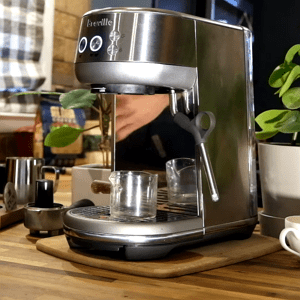
Bambino Plus is the clear milk choice in this shortlist. The BES500 provides three automatic milk temperatures, three texture settings and manual steaming. The pitcher rests on a temperature sensor and the machine stops automatically at the selected endpoint. Coffee preparation remains manual and brewing still happens before or after milk, but the owner does not need to judge every second of aeration and heating. That reduction in attention is the main reason to spend almost the entire machine cap here.
Automatic milk is not automatic cleaning. The wand must be wiped immediately, lowered and allowed to purge. Purge water enters the compact drip tray, which frequent users will empty regularly. Milk quantity, pitcher contact, milk type and starting temperature affect the routine. Repeat the same setup before deciding a preset is inconsistent. Buyers who already want to learn manual steaming should compare the cheaper standard Bambino, even though it is outside this four-pick shortlist, because the Plus premium mainly pays for milk assistance.
ECP3420 uses a manual Advanced Cappuccino frother and one heating path for coffee and steam. After brewing, the owner changes mode, waits for steam, froths a small amount of milk, purges and wipes the wand, then returns the machine toward coffee temperature. That sequence can serve one cappuccino patiently. It becomes slow when several drinks are waiting. The wand can create foam, but there is no automatic endpoint, dedicated steam boiler or simultaneous brewing and steaming.
Flair Classic has no milk hardware. A separate hand frother, electric frother or standalone steamer must be bought and cleaned. Milk also needs heating unless the added device provides it. This can be reasonable for an occasional cappuccino made after one lever shot. It is a poor way to build a fast latte station. The machine’s low price should not encourage a collection of add-ons that costs more, uses more counter space and still asks for a complicated sequence.
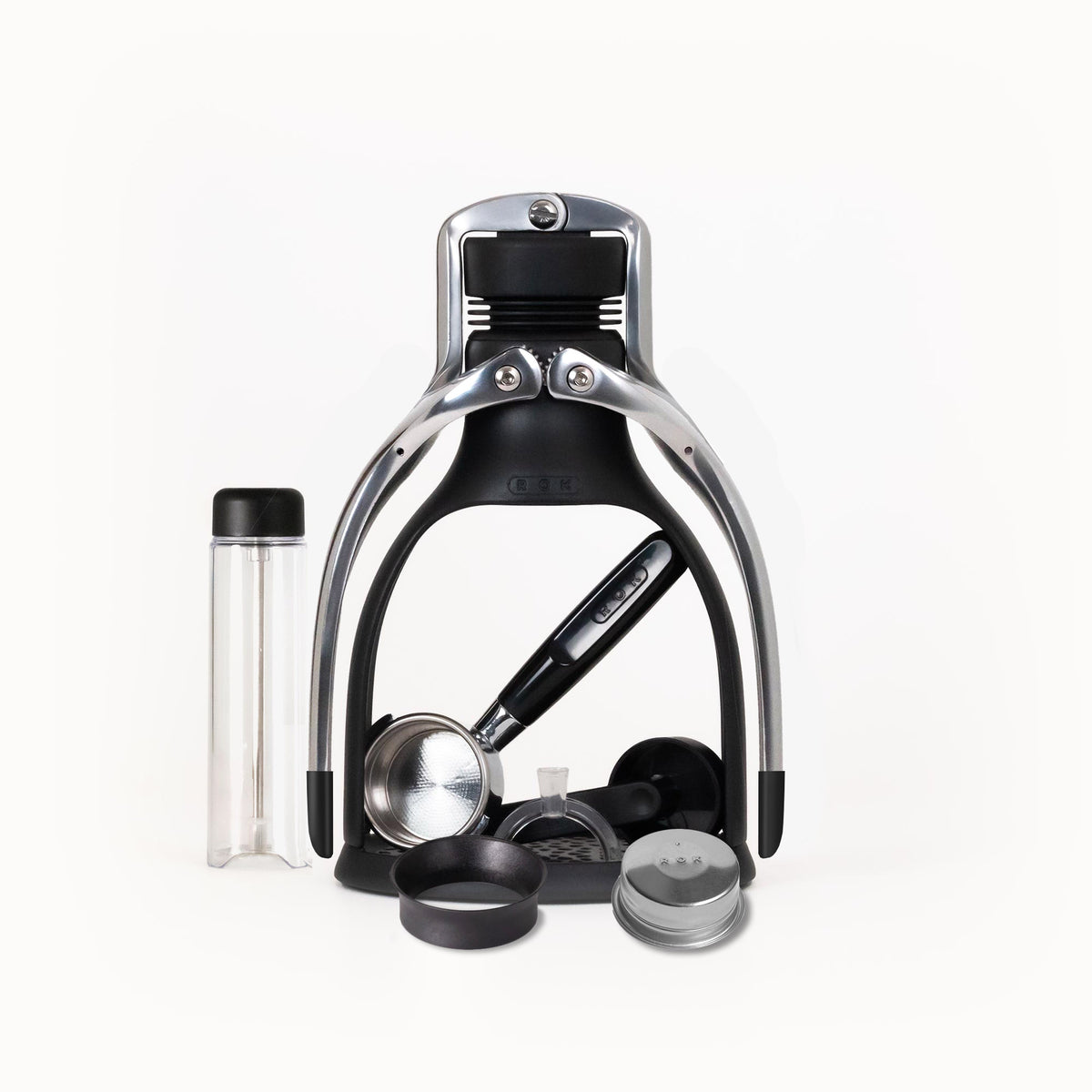
ROK Black PLUS includes a separate hand-pump frother, which makes its current package more complete than a bare press. It is still not a steam wand. Heat the milk separately, transfer it safely, pump to create texture, then pour around the espresso routine. The included tool can be enough for occasional foam. It does not provide continuous wet steam, automatic temperature control or efficient group service.
Count an actual Saturday order. For two lattes, Bambino Plus requires two puck preparations, two extractions, milk work and cleanup. ECP3420 adds heater-mode changes. Flair adds kettle, detachable-head and separate milk equipment. ROK adds hot-water transfer, two-arm pulls and a separate frother. The cheapest machine is not necessarily the cheapest way to make the drink the household repeats. If milk is daily, pay attention to sequence and cleaning before pressure gauge, frame material or the number printed on the pump.
06Cost after checkout
Water, cleaning, seller remedy and replacement plans determine value
Ownership costs begin with water, cleaning and maintenance. A budget machine still handles heat, pressure, water and electricity, or asks the owner to handle hot parts directly. Read the exact manual, use the intended voltage, let hot components cool and keep proof of purchase. Before ordering, confirm who accepts an opened appliance, who pays return freight and who provides warranty or paid service.
Bambino Plus has the most appliance-like care routine here. Wipe and purge the steam wand after milk, rinse the basket, clean the group when prompted, manage the water filter where applicable and descale according to the manual and water conditions. Breville documents a cleaning reminder based on extraction count. The compact tray and automatic wand purge make regular emptying normal. An official support route is useful, but it does not establish a repair price or a universal lifespan.
ECP3420 keeps the machine price low with a light compact chassis and basic controls. Its tank, baskets, group area, frother and tray need routine cleaning, and the water path needs descaling as directed. The shared heater must transition safely between coffee and steam. Do not open an energized or pressurized appliance for improvised repair. Because the product route is support-oriented and retailer stock can vary, seller return terms matter as much as the advertised discount.
Flair Classic removes pumps, valves, heaters and electrical controls from the machine. That can make the mechanism easy to understand, but it does not make use maintenance-free. The hot brew head must cool, separate and rinse after each shot. Baskets need brushing, gauge and seal paths need inspection, and parts should dry before storage. Current manuals and replacement parts must match the current package. A simple metal frame cannot guarantee that every seal, gauge component or accessory remains available forever.
ROK documents replaceable GC chamber parts and a long limited US warranty for qualifying purchases. Those are meaningful ownership advantages, not proof of a measured lifespan. The basket, chamber, frame and seals still need rinsing, drying and inspection. Warranty exclusions include normal wear and misuse, and used units or regional packages can have different coverage. Keep the rating, package and purchase record visible when seeking help.
Water belongs in the budget because scale risk and taste begin on day one. Do not assume distilled, softened, reverse-osmosis or bottled water is automatically safe for every appliance. Follow the exact manufacturer guidance and relevant local service advice. Manual presses avoid boiler descaling inside the press, yet kettles can still scale and brew water still shapes taste. Record the water choice so another user does not change it casually.
07After delivery
Use the first week to test the complete routine while returns remain possible
Day one is for identity and safety. Match the rating plate, voltage and model code to the order. Photograph the box and machine, inventory accessories and read the exact manual before washing, filling or heating anything. Confirm the return deadline. An old family video can teach a physical motion, but it cannot prove that a current basket, gauge, wand or warranty belongs to the delivered package.
Choose one fresh medium-roast coffee and one starting recipe. Keep dose and beverage target steady while changing grind or basket choice deliberately. Record the coffee, setting, dose, output and taste in plain language. Thin and fast often calls for more resistance; slow and harsh often calls for less. Those are diagnostic starting points, not promises about every roast or machine.
With Bambino Plus, use the supplied dual-wall basket if the grinder is not ready, then learn the single-wall path when fine adjustment is available. Repeat one milk volume and one automatic setting. Weigh the drink rather than assuming a programmed button always produces the same result. Verify that wand purge, tray access and counter layout remain acceptable after several real mornings.
With ECP3420, prime the coffee and steam paths exactly as directed. Learn the single, double and pod baskets before buying modifications. Practice the mode change from brewing to steaming and back. If the full drink is too slow during the return window, an unpressurized basket will not fix the heater pace. It will mainly increase grinder and preparation demands.
With Flair Classic, choose either flow-control or bottomless for the first several shots instead of switching constantly. Build a safe kettle-to-cylinder route, keep the press stable and learn how the gauge responds to grind and lever movement. Let the head cool before disassembly. Decide whether the repeated fill, pull, clear and rinse sequence feels satisfying or merely cheap.
With ROK, begin with Smartshot if grind control is limited, then compare the standard basket only after the base routine is stable. Keep preheat, water quantity, dose and lever pace consistent. Try the included frother with the actual milk drink, not only water. The machine’s value depends on enjoying its physical feedback without needing a gauge or automatic stop.
08Owner context
Owner discussions reveal friction points without establishing failure rates
Use community reports to build questions. For Bambino Plus, ask whether the grinder budget remained intact and how often the small tray needs attention after milk. For ECP3420, ask which exact basket and grinder an owner used before copying a recipe. For Flair, ask which generation and current-package parts are present. For ROK, ask whether the account describes an old body, GC conversion, Explorer bundle or current Black PLUS.
Do not turn posts into a defect rate, taste ranking or expected lifespan. Enthusiast forums overrepresent people troubleshooting a problem and people proud of unusually long service. Water, coffee, technique, production year, model code, voltage, maintenance and local support differ. An individual account can show that a concern exists. It cannot show how frequently every buyer will encounter it.
09Four useful answers
The recommendations, with the budget limits kept visible
Breville Bambino Plus BES500: best for milk drinks and speed
Bambino Plus is the broadest electric recommendation when $500 applies only to the machine. Its current US package combines a 54 mm portafilter, single-wall and dual-wall baskets, programmable volumes and automatic or manual milk. Breville’s rapid-heater claim removes most readiness waiting, while coffee still needs grinding, dosing, tamping and evaluation. At $499.95, its value depends on a funded grinder. Choose it for daily lattes and a modular grinder path, not because the full station costs less than $500.
De’Longhi ECP3420: best low-cost electric start
ECP3420 gives a beginner a visible portafilter, pressurized single and double baskets, ESE support, a removable 37-ounce tank and a manual frother for an observed $169.95 context. The pressurized path allows suitable preground coffee and protects money for a later grinder. Its small shared heater, manual shot stop, light construction and limited feedback are the boundaries. Choose it for one or two patient drinks. Do not buy it expecting PID control, café queue speed or a hidden premium machine after several modifications.
Flair Classic: best pressure feedback for the lowest machine price
The current Flair Classic package is stronger than old reviews imply. It includes a pressure gauge, thin cylinder, flow-control portafilter and bottomless 2-in-1 portafilter for $159 direct. That creates a real path from forgiving preparation to grinder-led control without replacing the frame. The owner supplies kettle water, force, heat management, scale work and head cleanup. Choose it for one focused espresso and an educational lever ritual. Skip it when convenience, integrated milk or fast repeat drinks lead.
ROK EspressoGC Black PLUS: best tactile dual-arm package
ROK’s current $259 US Black PLUS bundle pairs its metal dual-arm press with standard and Smartshot baskets, a dosing funnel, splitter and separate hand frother. The standard basket supports technique-led espresso; Smartshot broadens grind tolerance. Core GC parts are replaceable and the US limited warranty is unusually long, subject to its conditions. There is no heater, gauge, timer, scale or automatic stop. Choose it because the two-arm process and package are attractive, not because simple mechanics mean a short morning.
Breville Bambino Plus
Best fit for frequent milk drinks when fast electric heat and automatic texture justify spending the full machine budget.
Avoid if $499.95 leaves no money for a capable grinder or if adjustable brew temperature is already important.
Read the full review →De’Longhi · ECP3420, US 120 VDe’Longhi ECP3420
Best fit for a tight first budget, one or two drinks and a forgiving preground or pressurized-basket start.
Avoid if you want rapid drink queues, PID control, a gauge or an immediate bottomless-basket workflow.
Read the full review →Flair · Current 2026 Classic packageFlair Classic
Best fit for one deliberate straight espresso and a buyer who wants visible pressure at the lowest machine price.
Avoid if you need built-in heat, quick repeat shots, integrated milk or a familiar pump-machine routine.
Read the full review →ROK · Current US Black PLUS packageROK EspressoGC Black PLUS
Best fit for a buyer who values dual-arm feel, simple mechanics, two basket paths and occasional milk.
Avoid if you want a heater, pressure gauge, automatic stop or several drinks with little preparation.
Read the full review →10Visible answers
Espresso machines under $500 FAQ
What is the best espresso machine under $500?
Bambino Plus is the strongest milk-drink choice, ECP3420 is the lowest-cost electric option, Flair Classic is the best low-price lever with a gauge, and ROK EspressoGC is the tactile dual-arm alternative. The best one depends on the work and supporting gear you want.
Can a complete espresso setup cost less than $500?
Yes, especially with ECP3420 and suitable preground coffee or a Flair or ROK paired with gear you already own. A fresh-bean Bambino Plus setup normally exceeds $500 because the machine alone was $499.95 at the dated check.
Do I need an espresso grinder?
You need one for direct-control single-wall, bottomless or standard baskets. Pressurized, flow-control and Smartshot baskets accept a broader grind range, but freshness and consistency still affect taste.
Is 15 bar better than a manual lever?
No. Fifteen bar is a pump maximum on machines such as ECP3420, not a quality ranking or target pressure through coffee. A lever creates pressure through the user, while grind, dose, water heat, yield and taste still matter.
Which pick is best for lattes?
Bambino Plus is the clear daily-latte choice because it provides automatic or manual steam. ECP3420 can make one patient cappuccino. Flair needs separate milk equipment, and ROK includes a hand frother rather than a steam wand.
Are manual lever machines cheaper to own?
They remove the pump, boiler and electronics from the press, but still need a kettle, scale, grinder for direct baskets, seals and cleaning. They are good value when the manual routine is wanted and supporting gear already exists.
Should I buy used instead?
Used equipment can deliver more hardware under $500, but condition, scale history, safety, accessories and seller remedy become central. Ask for a live demonstration and written return terms rather than treating the original retail price as evidence of present value.
Why is the Gaggia Classic E24 not included?
Its checked North American price was $549, above this guide’s strict machine-only ceiling. It remains a relevant step-up for buyers who want a traditional 58 mm single-boiler platform and can expand the budget.
See the price class tested
An independent comparison of affordable espresso machines
James Hoffmann
The Best Espresso Machine Under £500
An independent comparison of affordable pump machines that demonstrates how design, workflow and milk change across the price class. It predates this exact shortlist and does not supply current US specifications or prices.
Watch on YouTubeHow the guide was built
A strict machine-price ceiling, exact models and complete-station context
I checked exact US models or packages, current official pages and manuals, dated prices, independent evaluations and bounded owner context on September 25, 2026. The machine-only ceiling is strictly below or equal to $500 before tax and optional accessories. Manufacturer documents control identity and specified operation; independent work adds observed workflow; owner accounts identify questions without establishing rates.
This is a research-led guide, not a Coffeedant side-by-side test. I did not invent measurements, transfer facts between regional siblings, call a machine complete when it still needs a grinder or kettle, or rank value by the machine price alone. Confirm the exact model, delivered package, seller, voltage, stock, warranty and return terms before paying.
Check the evidence
Sources and further reading
- Breville US: Bambino Plus BES500
Exact US identity, $499.95 price, package, milk settings and features checked September 25, 2026.
- Breville: Bambino Plus BES500 US manual
Official setup, baskets, brewing, automatic and manual milk, cleaning, descale and safety instructions.
- Serious Eats: Breville Bambino Plus review
Independent hands-on workflow and volumetric context. Observations belong to its unit and protocol.
- Coffee Kev: Bambino Plus long-use review
Independent long-use perspective; Sage regional price, voltage and package details are not transferred to the US BES500.
- De’Longhi US: ECP3420 support
Official exact-model support, manual route, intended setup, operation, cleaning and safety.
- De’Longhi: ECP3420 instructions
Hosted exact-model instructions used to cross-check priming, baskets, ESE use, steam and care.
- Amazon US: ECP3420 listing
$169.95 observed US seller context checked September 17, 2026; price, seller and stock can change.
- Tom’s Coffee Corner: ECP3420 review
Independent ECP-family review used with exact-model boundaries.
- Tom’s Coffee Corner: ECP3420 video
Independent exact-model demonstration published December 30, 2022; visual evidence rather than Coffeedant testing.
- Flair: Flair Classic
Official current package, $159 price, dimensions, materials and workflow checked September 23, 2026.
- Flair: Classic manuals
Official current setup, gauge, portafilter, brewing, cleaning and safety guidance.
- Coffee Chronicler: Flair Classic review
Independent family review and workflow context; current contents are controlled by Flair’s 2026 listing.
- Sweet Maria’s: setting up and using the Flair
Independent early-platform video published May 23, 2017, used only for the core detachable-head routine.
- ROK USA: EspressoGC Black PLUS
Official current US identity, $259 price, package, materials, dimensions, care guidance and media checked September 25, 2026.
- ROK USA: warranties
Official limited-warranty term, purchaser requirements, wear and misuse exclusions, and claim route.
- The Coffee Folk: ROK Espresso GC review
Independent review updated February 5, 2026, used for heat, gauge and workflow context.
- Whole Latte Love: EspressoGC and conversion kit
Independent retailer demonstration published January 15, 2019; current package and price are verified separately.
- r/espresso: ECP3420 discussions
Self-selected owner and beginner questions about baskets, grinders and workflow; not representative outcome data.
- r/FlairEspresso: Classic workflow questions
Self-selected discussion across several Classic generations, used to identify questions rather than rates.
- r/espresso: ROK Espresso GC discussion
Self-selected owner and shopper context across different ROK packages and regions.
- James Hoffmann: The Best Espresso Machine Under £500
Independent category comparison published September 18, 2020, running 24 minutes 22 seconds. It explains affordable pump-machine trade-offs but does not define the current shortlist or prices.
The buying decision
Protect the workflow budget, not just the $500 ceiling
Choose Breville Bambino Plus when fast electric heat and automatic milk will make the station useful every day. It is the best fit for regular lattes, but the $499.95 machine price means a fresh-bean setup exceeds the headline cap unless a grinder already exists. Treat that as a deliberate complete-station decision.
Choose De’Longhi ECP3420 when the first purchase must stay low and suitable preground coffee or ESE pods provide a practical start. It offers a real pump-machine and manual-milk routine for far less than the cap. Accept the small sequential heater, pressurized-basket ceiling and basic feedback instead of trying to modify them away immediately.
Choose Flair Classic when one careful espresso, a pressure gauge and two learning paths sound more rewarding than internal heat. Its $159 current package is unusually coherent, but kettle, scale, grinder and milk gear remain outside the frame. It is the best budget lever for visible feedback, not the fastest appliance.
Choose ROK EspressoGC Black PLUS when a dual-arm pull, standard and Smartshot baskets, replaceable GC parts and an included hand frother fit the desired ritual. The $259 package balances forgiveness and direct preparation well. Lack of heat, gauge and automatic stopping keeps the owner responsible for every important variable.
If the complete routine exceeds the available money or patience, wait. Saving for the right grinder, buying coffee that suits a forgiving basket or choosing a simpler drink method can be better than filling the counter with compromises. The best espresso machine under $500 is the one that leaves enough budget and attention for the system around it.