
02Start with the decision
Classika PID in one honest frame
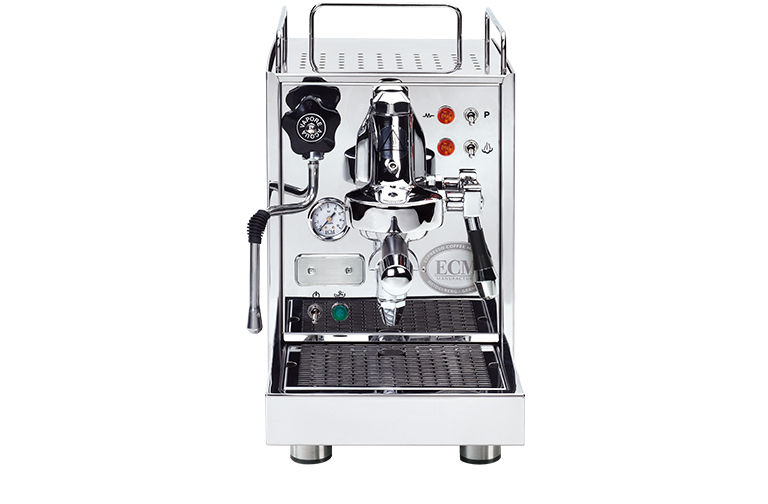
The ECM Classika PID is a reservoir-fed, vibration-pump E61 machine with a 0.75 L stainless single boiler, PID display, manual lever, and one steam wand. This is the current Classika PID. The page discusses ECM’s optional E61 Flow Profile Valve separately and does not assume it is fitted, calibrated, or covered by every machine warranty. That identity matters because two machines can promise the same drink while asking for completely different work before and after it. The useful first question is not whether Classika PID can make coffee. It is whether its heating, preparation, milk, water, and cleaning sequence matches the way the household will actually use it. [source] [source] [source]
The strongest reason to choose it: It concentrates ECM’s E61 build, PID temperature setting, timer, and optional flow control into an espresso-first machine only 250 mm wide. The main reason to pause: One boiler must move between brewing and steaming, so the premium control feels least useful in a milk-heavy queue. Those two statements explain the rating more accurately than a long feature list. A high score in one dimension does not erase a compromise elsewhere, and the overall rating should be read with the six category scores rather than alone.
03The first week
Set up the whole station, not only the machine
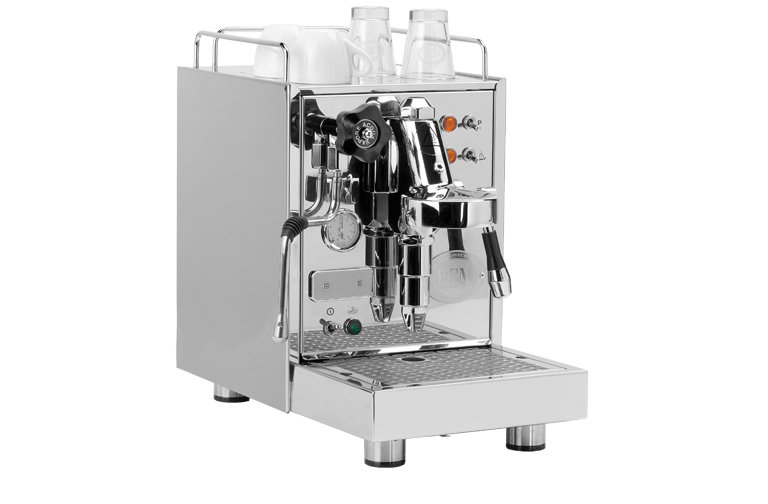
Reserve top space for the reservoir and cup rail, front room for the lever and portafilter, and side access for steam work. Confirm whether the flow valve is standard, dealer-installed, or absent, then establish water and PID settings before changing pressure or flow. Begin by matching the rating plate, manual, water guidance, included parts, and seller invoice to the exact delivered unit. Wash the removable food-contact parts as directed, install any supplied filter correctly, complete the documented rinse or prime sequence, and keep packaging until the machine has completed several normal cycles without an issue. [source] [source] [source]
- Day one: learn filling, startup, shutdown, warnings, and waste paths.
- Days two and three: repeat one coffee and recipe, changing one variable at a time.
- Days four and five: make the normal household order, including the refill and cleanup.
- Days six and seven: perform routine care and decide whether the station still feels convenient.
Water is both an ingredient and a maintenance variable. Follow manufacturer and local-service guidance rather than assuming that very hard, completely demineralized, distilled, or generic bottled water is automatically suitable. If flow changes abruptly, a leak appears, a protection device trips, or the machine smells hot in an abnormal way, stop and arrange qualified diagnosis instead of repeatedly restarting it.
04Rating deep dive
Espresso: control the variables the machine leaves to you
PID control and the E61 group provide a repeatable temperature target, while the shot timer makes yield timing visible. With the optional flow valve, the owner can reduce or increase group flow, but should first stabilize grind, dose, puck preparation, yield, and full-open calibration. [source] [source] [source] A useful starting recipe is a controlled experiment, not a promise of flavor. Keep the coffee, dose, target beverage, preparation, cup, and starting machine state consistent while changing the grind or documented strength setting in one small step.
Taste should decide the next move. Thin, sharp coffee often asks for more extraction through a finer grind or a different ratio. Dry, hollow, or harsh coffee often asks for less extraction. Those are general directions, not universal rules. Dark roast, light roast, decaf, water chemistry, basket geometry, bean age, and milk can all change the best recipe. The documented controls determine how directly Classika PID lets the owner respond.
Repeatability deserves more weight than one dramatic cup. Make the same recipe on several ordinary mornings, record the useful settings, and judge whether the machine makes the desired result easier to reproduce. That is the practical meaning behind the 9.0 out of 10 editorial score.
Espresso assessment
Espresso evidence translated into daily use
The Classika PID score is an editorial judgment from documented design, independent demonstrations, owner context, and the dated market position. It is not a bench result from Coffeedant.
| Signal | What the evidence says | Buying consequence |
|---|---|---|
| Brew architecture | A 0.75 L PID boiler feeds the E61 group. | PID, shot timing, E61 mechanics, and optional flow control create a serious espresso toolkit. |
| Control available | Time, temperature target, pressure, and optional group flow are visible or adjustable. | Excellent for a deliberate espresso owner with a capable grinder; unnecessary complexity for push-button use. |
| Recipe consequence | Flow profiling adds value only after grind, dose, puck, and yield are repeatable. | Treat this as part of the Classika PID buying decision, not a promise of identical results in every kitchen. |
Evidence note: Unknowns stay unknown. Variations in coffee, water, milk, setup, firmware, regional package, wear, and technique can change the experience described by these sources.
05Rating deep dive
Milk: speed only matters when texture stays controllable
Steam comes from the same 0.75 L boiler used for brewing. It can texture a pitcher with good manual control, but reaching steam temperature, purging, steaming, refilling, and cooling the boiler back to brew state make repeated milk drinks slow. [source] [source] [source] [source] Milk performance is a combination of heat delivery, air control, circulation, recovery, cleaning, and operator attention. A fast system can frustrate a beginner if it gives little time to correct position, while a slower system can frustrate a household making several drinks.
Use cold milk, a consistent quantity, and the recommended vessel or container. With a manual wand, purge condensate, add a controlled amount of air near the beginning, then position for circulation and stop before overheating. With an automatic milk path, start from a conservative documented setting, keep the sensor or hose arrangement consistent, and change temperature or texture one step at a time. Alternative milks differ by formulation, not only plant type.
The cleaning step belongs in the milk rating. Wipe and purge a wand immediately. Rinse or refrigerate a removable container as directed. Complete any prompted milk-path rinse instead of postponing it. Dried milk can narrow openings, change texture, create odors, and turn a convenient system into a recurring maintenance problem.
Milk assessment
Milk evidence translated into daily use
The Classika PID score is an editorial judgment from documented design, independent demonstrations, owner context, and the dated market position. It is not a bench result from Coffeedant.
| Signal | What the evidence says | Buying consequence |
|---|---|---|
| Steam or milk system | The brew boiler rises to steam temperature on demand. | Steam quality can be strong, but one boiler makes the sequence inherently serial. |
| Operator input | A manual wand gives direct texture control. | Comfortable for one milk drink, tedious for several drinks or frequent brew-steam switching. |
| Queue consequence | Transition, purge, refill, and cool-down time break the queue. | Treat this as part of the Classika PID buying decision, not a promise of identical results in every kitchen. |
Evidence note: Unknowns stay unknown. Variations in coffee, water, milk, setup, firmware, regional package, wear, and technique can change the experience described by these sources.
06Rating deep dive
Workflow: count every touch from cold start to a clean counter
For straight espresso, the sequence is coherent: warm fully, prepare the 58 mm basket, lift the lever, watch time and yield, lower the lever, flush, and clean. Milk changes the pace because the boiler transitions after the shot. [source] [source] [source] Marketing often times one internal event, such as heater readiness, while the owner experiences the whole drink. Grinding, dosing, warming, extracting, steaming, refilling, rinsing, knocking out coffee, wiping, and returning milk all belong in the clock.
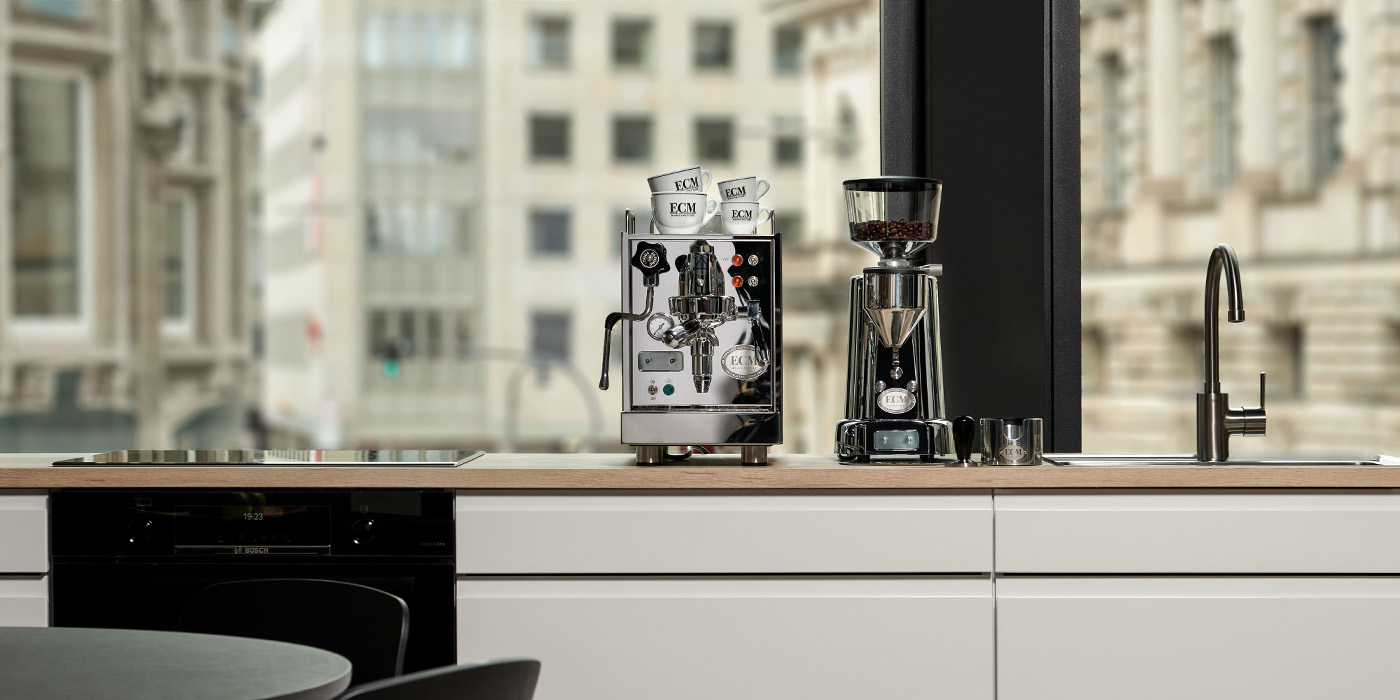
Map the station before purchase. Confirm cabinet clearance, tank and bean access, door or brew-unit travel, portafilter movement, carafe removal, drip-tray path, cord location, ventilation, grinder footprint, and a safe landing place for wet parts. A machine can fit by published dimensions and still be awkward under a cabinet or beside a wall.
The most revealing home trial is the busiest normal order from a cold start. Make it in the sequence people actually request it, then restore the machine to a clean ready state. If the routine feels coherent, the workflow score is meaningful. If one repeated task causes resentment, a rival with a lower headline specification may deliver more value every day.
Workflow assessment
Workflow evidence translated into daily use
The Classika PID score is an editorial judgment from documented design, independent demonstrations, owner context, and the dated market position. It is not a bench result from Coffeedant.
| Signal | What the evidence says | Buying consequence |
|---|---|---|
| Cold-start routine | Fast Heat-Up targets about 11 minutes. | Straight-espresso operation is clean and well instrumented. |
| Drink sequence | PID and shot timer reduce guesswork during brewing. | A strong fit for focused shots; the rating falls when milk and quick warmup dominate. |
| Cleanup load | E61 care and single-boiler switching remain repeated work. | Treat this as part of the Classika PID buying decision, not a promise of identical results in every kitchen. |
Evidence note: Unknowns stay unknown. Variations in coffee, water, milk, setup, firmware, regional package, wear, and technique can change the experience described by these sources.
07Rating deep dive
Build and service: judge access, support, and failure response
The 18.5 kg chassis, stainless boiler, E61 group, metal case, valves, and gauges feel substantial. Conventional construction supports qualified service, but scale, E61 lubrication, pump, heating element, PID probe, seals, and optional valve calibration still need attention. [source] [source] [source] [source] Material descriptions can help set expectations, but ownership depends more on stable controls, accessible daily-care parts, documented service, and the availability of the exact component for the exact revision.
Backflush and clean the E61 group at the documented cadence, rinse baskets and screen, wipe and purge the steam wand, monitor water compatibility, lubricate only where instructed, and leave internal boiler, mains-voltage, and pressure work to qualified service. Removable does not mean maintenance-free, and a cleaning program does not inspect every seal, hose, valve, burr, sensor, or heating component. Use only procedures and products permitted by the manual. Boiler, mains-voltage, pressure, refrigerant, or internal-water work belongs with a qualified technician unless the manufacturer explicitly defines an owner procedure.
Many online Classika examples include dealer modifications or optional valves, and owner thermometry methods vary. Reports can guide setup questions but do not establish factory performance or failure rates. Self-selected reports can reveal useful inspection points, but they do not provide the denominator needed for a defect rate. The build score therefore rewards documented construction and support while preserving uncertainty about long-term incidence.
Build assessment
Build evidence translated into daily use
The Classika PID score is an editorial judgment from documented design, independent demonstrations, owner context, and the dated market position. It is not a bench result from Coffeedant.
| Signal | What the evidence says | Buying consequence |
|---|---|---|
| Core construction | An 18.5 kg chassis supports an E61 group and stainless boiler. | Heavy conventional construction and current factory documentation inspire confidence. |
| Access and care | Panels, valves, pump, gauges, and controls follow a serviceable prosumer layout. | Long ownership still depends on compatible water and competent local service. |
| Support boundary | Scale, seals, heating parts, and optional accessories remain maintenance variables. | Treat this as part of the Classika PID buying decision, not a promise of identical results in every kitchen. |
Evidence note: Unknowns stay unknown. Variations in coffee, water, milk, setup, firmware, regional package, wear, and technique can change the experience described by these sources.
08Rating deep dive
Features: separate daily help from brochure decoration
PID temperature control, shot timer, fast heat-up, ECO mode, cleaning reminder, dual pressure gauge, low-water protection, and optional E61 flow profiling are purposeful. There is no volumetric stop, rotary pump, dual boiler, or mains connection. [source] [source] [source] A useful feature removes a repeated burden, exposes a meaningful variable, or makes maintenance clearer. A feature has limited value when it duplicates a scale or timer, depends on an unsupported region, or hides a decision the owner would rather control.
Read feature names literally. A PID can regulate one heater without measuring coffee-bed temperature. A pressure gauge can report boiler pressure rather than extraction pressure. A saved beverage can repeat programmed time or volume without correcting grind. An automatic milk setting can repeat a selected routine without knowing whether the espresso beneath it tastes balanced.
For connected products, check app availability, accounts, network requirements, firmware policy, privacy preferences, and useful operation without a phone. For manual products, verify that the desired timer, temperature display, low-pressure stage, or volumetric stop is documented for the exact model.
Features assessment
Features evidence translated into daily use
The Classika PID score is an editorial judgment from documented design, independent demonstrations, owner context, and the dated market position. It is not a bench result from Coffeedant.
| Signal | What the evidence says | Buying consequence |
|---|---|---|
| Useful control | PID and shot counter are standard. | The controls directly support espresso rather than adding menu decoration. |
| Missing control | Fast heat-up, ECO mode, and cleaning reminder aid ownership. | Strong for temperature and timing; incomplete for buyers needing automation or simultaneous steam. |
| Buyer relevance | Flow control is optional; volumetrics, plumbing, and dual boilers are absent. | Treat this as part of the Classika PID buying decision, not a promise of identical results in every kitchen. |
Evidence note: Unknowns stay unknown. Variations in coffee, water, milk, setup, firmware, regional package, wear, and technique can change the experience described by these sources.
09Rating deep dive
Value: compare complete ownership on the same date
At an observed $1,649 before optional flow-control cost, Classika is priced for someone who values E61 espresso and finish more than drink throughput. Profitec GO is more direct; Puristika removes steam; small dual boilers solve a different routine. The checked price context was $1,649.00 on September 18, 2026. It is a dated reference, not a promise of today's checkout total, availability, finish surcharge, tax, delivery, bundle, or local warranty. [source]
It concentrates ECM’s E61 build, PID temperature setting, timer, and optional flow control into an espresso-first machine only 250 mm wide. That benefit deserves payment only when it is used often. One boiler must move between brewing and steaming, so the premium control feels least useful in a milk-heavy queue. If the limitation would trigger an early replacement, the apparently lower price is false economy. If the strength removes a daily frustration for years, a higher price can be rational without claiming the product is inexpensive.
Value assessment
Value evidence translated into daily use
The Classika PID score is an editorial judgment from documented design, independent demonstrations, owner context, and the dated market position. It is not a bench result from Coffeedant.
| Signal | What the evidence says | Buying consequence |
|---|---|---|
| Checked price | $1,649 observed US price checked September 18, 2026. | The price is defensible for premium E61 espresso if the milk limitation is accepted before purchase. |
| Total station | Optional flow control, grinder, water treatment, accessories, tax, and service add cost. | Compare the exact flow-control bundle and complete grinder budget, not only the machine sticker. |
| Long-term fit | Profitec GO, Puristika, and compact dual boilers each solve a different priority. | Treat this as part of the Classika PID buying decision, not a promise of identical results in every kitchen. |
Evidence note: Unknowns stay unknown. Variations in coffee, water, milk, setup, firmware, regional package, wear, and technique can change the experience described by these sources.
10Put the alternatives beside it
Classika PID versus the closest practical choices
A useful comparison keeps architecture and buyer intent visible. A cheaper product may demand more technique, a faster product may expose fewer controls, and a traditional product may ask for more warmup and care. The rows below summarize the decision rather than pretending every specification carries equal weight.
| Machine | Price position | The quick decision |
|---|---|---|
| ECM Classika PID | $1,649 observed | Choose for PID E61 espresso and optional flow profiling with occasional steam. |
| ECM Puristika | Similar premium single-boiler class | Choose a smaller espresso-only ECM when no steam wand is needed. |
| Rancilio Silvia Pro X | Compact dual-boiler class | Choose dual boilers for quick temperature changes and simultaneous milk work. |
DetailsOpen the technical and workflow comparison
| Machine | Dimensions | Heating | Coffee setup | Milk workflow | Best fit |
|---|---|---|---|---|---|
| ECM Classika PID | 250 × 445 × 395 mm | 0.75 L PID single boiler | E61, timer, optional flow valve | Sequential manual steam | Espresso-first enthusiast |
| ECM Puristika | 195 × 348 × 315 mm plus external tank | 0.75 L PID single boiler | E61-style group and timer | None | Pure straight-espresso station |
| Rancilio Silvia Pro X | Box-style compact body | Independent PID brew and steam boilers | 58 mm group with soft infusion | Simultaneous manual steam | Espresso plus frequent milk |
Compare boiler count, group style, warmup, flow-control inclusion, milk sequence, tank access, grinder, service, and the exact delivered package.
11Owner evidence in proportion
What owner discussions add, and what they cannot prove
Classika owners frequently discuss warmup, PID offset, group temperature, flow-control calibration, pump pressure, single-boiler steam transitions, E61 lubrication, and whether the machine is still right after milk-drink volume increases. [source] [source] Repeated themes are useful because they point to the moments a specification page rarely explains: filling awkwardly under cabinets, learning a milk path, clearing a prompt, waiting between jobs, hearing a pump, or finding local service.
Many online Classika examples include dealer modifications or optional valves, and owner thermometry methods vary. Reports can guide setup questions but do not establish factory performance or failure rates. Forum participants choose to post, machines and regions differ, and a thread can overrepresent either enthusiastic early ownership or a difficult fault. One report can prove that an event happened to one person. It cannot show how often it happens across all units.
Use owner evidence to create questions. Ask the seller to demonstrate tank access, cleaning, milk disassembly, saved settings, grinder adjustment, error recovery, and the exact warranty route. Ask a service provider whether the specific model and revision are supported. Those answers turn anecdote into a practical pre-purchase check.
12Choose by routine
Four routes from this decision
There is no universal upgrade path. Choose the card that fixes the most important daily mismatch, then read the full review before treating it as a recommendation for your counter, coffee, region, and budget.
Espresso only
ECM Puristika
Shrink the machine and remove the steam system when straight espresso is the whole brief.
Read the Puristika reviewFaster milk service
Rancilio Silvia Pro X
Choose dual boilers when brew temperature and steam must be ready together.
Read the Silvia Pro X reviewCompact modern PID
Profitec GO
Use a simpler heated group and direct controls when E61 tradition is not essential.
Read the Profitec GO reviewFlow control plus dual boilers
Lelit Bianca
Spend more for independent boilers, rotary pump, plumbing, and factory paddle profiling.
Read the Lelit Bianca review13Questions before buying
Classika PID FAQ
Does every Classika PID include flow control?
No. ECM’s E61 Flow Profile Valve is an optional accessory, although some retailers sell bundles or install it before delivery.
Can it brew and steam simultaneously?
No. Its 0.75 L single boiler changes between brew and steam temperature.
Does the PID display shot time?
Yes. The display functions as a shot counter during extraction.
Is 11 minutes full warmup?
It is ECM’s Fast Heat-Up figure. The portafilter, cup, room temperature, idle state, and preferred routine can change practical readiness.
Can Classika connect to a water line?
No. It is a reservoir machine with a vibration pump.
What does the flow valve change?
It restricts or opens water flow at the E61 group, allowing manual preinfusion and profile changes. It does not correct poor puck preparation.
Is it good for lattes?
It can texture milk well, but the serial brew-steam workflow is best for occasional drinks rather than a long latte queue.
Is $1,649 the price with flow control?
Do not assume so. It is dated US specialist context. Confirm valve, gauge, installation, warranty, tax, and freight in the exact offer.
See the machine in use
An independent video perspective
Whole Latte Love
Review: ECM Classika PID Espresso Machine
A specialist-retailer review showing the Classika controls, E61 group, extraction, and steam workflow. Current official specifications and optional flow control are checked separately.
Watch on YouTubeWhy I trust the verdict
What the evidence lets me say with confidence
I began with the exact model identity and official documentation, then separated factory claims from independent observation and self-selected owner reports. Conflicting regional or revision details were not averaged. Price was checked on September 18, 2026; stock, finishes, tax and warranty can change. Video supplies visual context, not Coffeedant testing. Community material informs questions, never failure rates. Missing measurements and long-term incidence data remain unknown.
Check the evidence
Sources and further reading
- ECM: Classika PID
Official current identity, boiler, PID, timer, fast heat-up, pump, care features, tank, dimensions, weight, and images.
- ECM: Classika PID manual
Official setup, PID, brew, steam, cleaning, safety, water, ECO, and troubleshooting guidance.
- Whole Latte Love: ECM Classika PID
$1,649 observed US specialist context checked September 18, 2026; package and price can change.
- Clive Coffee: ECM Classika PID
Independent specialist specifications and workflow comparison used to cross-check the current retail proposition.
- Whole Latte Love: Classika PID review
Specialist-retailer video published March 25, 2015. Visual machine evidence, with current facts checked separately.
- ECM service
Official manuals, dealer, service, and care entry point; coverage varies by market.
- ECM: E61 Flow Profile Valve
Official optional-accessory identity, compatibility, gauge, and manual-flow context.
- r/espresso: Classika PID with flow control
Self-selected buyer and owner discussion used for workflow and comparison questions, not incidence.
- r/espresso: Classika operating questions
Self-selected owner discussion used to identify PID, pressure, and manual interpretation questions.
- Barista Hustle: DIY water recipes
Independent water background; ECM instructions and local service determine compatible treatment.
- ECM: Puristika
Official espresso-only comparison used to separate steam capability, footprint, tank, and features.
The buying decision
Classika PID is best when espresso gets first claim on the budget
Classika PID gives a straight-espresso drinker the controls that matter: a stable temperature target, shot timing, 58 mm preparation, E61 behavior, and a credible optional path into manual flow profiling. Its construction and current documentation complete the proposition.
The single boiler is not a hidden footnote. One cappuccino is reasonable; a morning milk queue is the wrong job. Confirm whether flow control is included, pair it with a grinder of equal seriousness, and Classika becomes one of ECM’s most coherent home machines.
Check ECM specifications